
Endorsing the strategic direction of the International Olympic Committee (IOC) towards 2032, the 146th IOC Session in Lausanne, Switzerland, today made the IOC and the Olympic Movement “Fit for the Future”. With their support for the strategy proposed by IOC President Kirsty Coventry, the IOC Members laid the foundation that will allow the IOC and the Olympic Movement to remain strong, relevant and impactful in the years to come.
“Our responsibility is to build on the strong foundations that have been laid by those who came before us. Our responsibility is to prepare for generations that will follow us. Fit for the Future is designed to build on those strengths. It was designed as a genuine opportunity to listen, to reflect and to shape the future of our Movement together.,” President Coventry said.
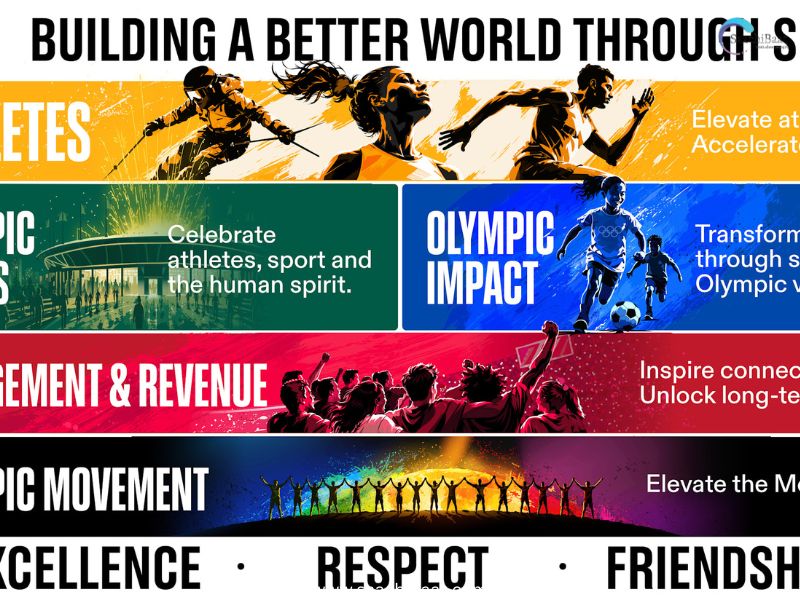
“Fit for the Future” was presented to the IOC Session under five themes – Athletes, Olympic Games, Olympic Movement, Olympic Impact, and Engagement and Revenue – each of them including a goal, an ambition, objectives for 2032, and commitments.
The strategic direction is the result of an extensive consultation process with the entire Olympic Movement under the headline of “Pause and Reflect”. IOC Members, IOC Honorary Members, over 2,200 athletes and athlete representatives, IOC Commissions, International Federations, National Olympic Committees, Organising Committees for the Olympic Games, more than 100 Olympic Hosts and Legacy entities, the Worldwide Olympic Partners, Media Rights-Holders, media representatives and the IOC staff engaged in the discussion, with three key objectives:
to identify key opportunities and challenges across the Olympic Movement;
to ensure that the strategic direction is shaped collectively by the IOC Members and the Olympic Movement; and
to analyse global, sports and corporate trends impacting the Olympic Movement.
Nine working groups were set up to take the consultations further and develop the goals, the ambitions, the objectives for 2032, and the commitments under the five themes of the “Fit for the Future” process. In line with the principle of “athletes first”, the IOC Athletes’ Commission was involved in all the working groups. In addition, the Future Host Commission for the Games of the Olympiad led the reform of the future host selection process.
The 146th IOC Session is a critical milestone on the transformation journey that the IOC and the Olympic Movement have embarked on. While “Fit for the Future” remains an ongoing process, the first concrete deliverables on the commitments under the five themes were presented to the IOC Session.
It was announced that, for the first time in Olympic history, every athlete at the Olympic Games will be eligible for a new USD 10,000 “Fit for the Future Olympian Grant”. The grant has been set up to support the sporting career or the career transition of Olympians. A fund of USD 140 million per Olympiad has been set aside. The first athletes to benefit from this initiative will be the Olympians who competed at the Milano Cortina 2026 Olympic Winter Games.
The IOC Members approved a series of amendments to the Olympic Charter intended to strengthen the principle of neutrality within the Olympic Movement and to modernise the governance of the Olympic Games programme. In addition, they approved a new methodology to define the Olympic programme going forward, centred on the introduction of a discipline-based evaluation.
The Session also endorsed a detailed set of reforms of the Olympic Games host selection process by introducing a new transitional stage of “Strategic Dialogue” and by defining the timeline to elect the Olympic host for 2036 in mid-2029. The changes build on the dialogue approach, which was successfully introduced in 2019, and which emphasises benefits for host communities and sustainable projects.
In addition, a first decision under the “Fit for the Future” process was the IOC’s announcement in March of its new Policy on the Protection of the Female (Women’s) Category in Olympic Sport.
The five themes of “Fit for the Future”, with their goals, ambitions, objectives for 2032 and commitments, are:
Athletes
Driven by the goal to elevate athletes and accelerate impact, the “Fit for Future” strategic direction sets out a clear ambition for an authentically athlete‑first Olympic Movement. It aims to enable athletes to reach their full potential, benefit from lifelong opportunities, and amplify their positive impact on themselves, the Olympic Movement and society — while ensuring their voice is embedded at the heart of decision-making.
To deliver on this ambition, five objectives, supported by concrete commitments to drive implementation, will guide action through to 2032. Together, these measures aim to build a stronger, more connected and athlete‑centred Olympic Movement, where every athlete can succeed and contribute meaningfully beyond sport.
Goal: Elevate athletes. Accelerate Impact.
Ambition: Athletes thrive within an authentically athlete‑first Olympic Movement, enabled to achieve their full potential, to benefit from lifelong opportunities and to amplify their positive impact on the world.
2032 Objectives:
1. Embed the athlete voice and representation in decision-making: Ensure that athletes’ commissions are mandatory, well-supported and backed by clear standards empowering them to exercise tangible influence at every level throughout the Olympic Movement.
2. Ensure a positive life-changing Olympic experience: Ensure a positive, life‑changing Olympic Games experience bringing the unique, globally unifying character of the Games with the environment for athletes to perform at the highest level.
3. Support athletes throughout their sporting journey and beyond: Equip athletes with opportunities and skills to support their physical and mental health and well-being, and to excel throughout their sporting lifecycle and beyond, in collaboration with commercial partners, among others.
4. Protect integrity and healthy sport environments: Safeguard the integrity of sport and advocate for an athlete-centred, safe, fair and healthy environment within the Olympic Games and across the Olympic Movement.
5. Strengthen athletes’ sense of belonging: Deepen a strong sense of belonging to the Olympic Movement, ensuring that Olympians and athletes feel valued, understood, respected and connected to a global Olympic community for life.
Commitments:
Commitment 1 – Athlete representation – Make athletes’ commissions a mandatory and fully integrated component of governance across all sports organisations. This will be underpinned by enforceable IOC minimum standards and robust accountability mechanisms, while ensuring that they are sustainably financed and administratively supported so that they can operate effectively, independently and with meaningful impact.
Commitment 2 – Olympic Games experience – Develop the necessary requirements to enhance and protect the athlete experience at the Olympic Games, ensuring the consistent delivery of a high-performance environment and preserving the uniqueness of the Olympic Games.
Commitment 3 – Athlete support – Increase focus on direct and tailored support to athletes and every Olympian from the IOC and the Olympic Movement, providing accessible, athlete-centred services that enable them to thrive both during and beyond their sporting careers.
Commitment 4 – Strong Olympian community – Strengthen a connected and empowered global community, fostering a stronger sense of belonging, and a direct and lasting connection with the Olympics.
Olympic Games
The Olympic Games are a unique celebration of athletes, sport and the human spirit. From the energy of Paris 2024, where the entire city came alive and millions shared unforgettable moments, to Milano Cortina 2026, the Games continue to show their power to connect and engage. Building on this momentum, the IOC is taking action to continue to inspire the world and create lasting impact for people, communities and future generations.
This means focusing on what matters most: sport, celebration and impact. It also means enhancing and protecting the Games experience, in particular for athletes and fans. And it means simplifying how the Games are planned and delivered, with clearer roles, simpler requirements and stronger support for Organising Committees and their partners. By making better use of shared solutions, data and tools, organisers can spend less time managing complexity and more time delivering inspirational Olympic Games.
Goal: Celebrate athletes, sport and the human spirit.
Ambition: Olympic Games that inspire the whole world, built together and invested in, creating lasting impact for people, communities and generations to come.
2032 Objectives:
1. Shape the Olympic Games as a compelling and sustainable proposition that delivers clear and lasting value.
2. Protect and elevate the athlete and fan experience – designed, owned and prioritised throughout.
3. Review and clarify Games requirements, enabling differentiated implementation by context and need.
4. Strengthen oversight and integration from candidature to Games time, with enhanced standards and reusable solutions.
5. Ensure that other Olympic Movement events actively reinforce and extend the reach, relevance and impact of the Olympic Games.
Commitments:
Commitment 1 – Olympic Games proposition and experience – Focus on what matters most by taking control of the Olympic Games proposition: sport, celebration and impact, and ensuring a consistent, once‑in‑a‑lifetime Games experience.
Commitment 2 – Olympic Programme – Maintain a capped, curated sports programme—balancing athlete value, global appeal, cost and complexity to ensure viable and affordable Games.
Commitment 3 – Games requirements – Rebuild Games requirements from first principles, simplifying delivery and enabling flexible implementation based on context and need.
Commitment 4 – Games delivery model – Redesign the Games delivery model for today’s Games—simpler to deliver, more integrated and repeatable, enabled by modern workflow, data, technology and people capability, piloted and implemented early with Brisbane 2032 and fully realised with the 2036 Host.
Commitment 5 – Leading and collaborating on change – Ensure that this change is delivered across Games – driven by clear organisational prioritisation and focus to make it real, in partnership with hosts, IFs, NOCs and other stakeholders.
Olympic Movement
Guided by the overarching goal of elevating the Olympic Movement, the “Fit for Future” strategic direction articulates an ambition to foster a cohesive, resilient and forward-looking Olympic ecosystem rooted in shared values, solidarity and trust. It reflects a collective commitment to remain relevant and aligned in a rapidly evolving global environment, while strengthening collaboration across all stakeholders. By promoting greater clarity of roles, reinforcing accountability and upholding core good governance principles, it aims to enhance the Movement’s integrity, unity and overall impact.
To achieve this ambition, three key objectives will guide action for the Olympic Movement through to 2032: clarifying and strengthening roles and responsibilities to enhance alignment and effectiveness; upholding the highest standards of autonomy, ethics and good governance; and reaffirming the principles of solidarity, neutrality and peaceful coexistence that enable universality at the Olympic Games. These priorities are supported by three concrete commitments to reinforce transparent collaboration, embed enforceable governance standards and ensure universal participation of athletes at the Olympic Games—ultimately fostering a stronger, more coherent and values-driven Olympic Movement.
Goal: Elevate the Movement.
Ambition: We are united by purpose, solidarity and collaboration, and stand as a resilient and relevant Movement grounded in shared values, clear accountability and trust.
2032 Objectives:
1. Clarify and strengthen the roles and responsibilities of the Olympic Movement stakeholders: The roles and responsibilities of the Olympic Movement organisations are clearly defined, with clear accountability frameworks to ensure complementarity, minimise duplication and enable effective delivery, supported by clear accountability and oversight mechanisms.
2. Uphold the essential principles of autonomy, ethics and good governance: All Olympic Movement organisations are governed in a responsible and sustainable manner, and are committed to achieving and maintaining best-in-class standards, safeguarding their autonomy from undue external interference while engaging constructively with governments.
3. Reaffirm the core principles of solidarity, peaceful coexistence and neutrality: Universality at the Summer Olympic Games is achievable only if sport remains neutral, as it allows for peaceful coexistence between athletes at the Olympic Village and on the field of play. The solidarity sports model makes universal participation at the Olympic Games possible, creating more equality among participating NOCs, and more equality for participating athletes and their sports.
Commitments:
Commitment 1 – Clear roles and responsibilities – Create a better understanding of each stakeholder’s role and responsibility within the Olympic Movement to strengthen collaboration in a manner that is consistent and transparent.
Commitment 2 – Governance with clear and enforceable principles – All Olympic Movement stakeholders are governed according to the Basic Universal Principles of Good Governance, and their implementation should be strengthened through a clear set of enforceable principles, supported by the daily work with the stakeholders and a global capacity-building and learning programme.
Commitment 3 – Universal participation of athletes at the Olympic Games – Commit to ensuring that athletes from the territories of all 206 NOCs and the Refugee Olympic Team will compete at the Olympic Games, showing respect to each other on the field of play, embracing the Olympic values and living in peaceful coexistence during the Games.
Olympic Impact
Anchored in the goal of transforming lives through sport and the Olympic values, the “Fit for Future” strategic direction outlines a vision of a future where more people participate in sport, and it is embedded in everyday life, everywhere. It seeks to remove barriers to access sport and equip people with education and life skills to create stronger, more resilient communities through sport. Sport and the Olympic Games have an impact on promoting health and well-being, advancing education and inclusion.
To bring this vision to life, four priorities will shape efforts through to 2032: broadening and sustaining participation in sport, promoting equality and inclusion, strengthening the development of transferable skills through sport and Olympic values-based education, and leveraging collaboration with organisations outside the Olympic Movement to expand the reach and impact of sport.
Supported by three commitments, these actions aim to enhance sport’s contribution to society by driving measurable outcomes, directing investment where it matters most, harnessing the convening power of the Olympic Movement to deliver meaningful and lasting change, and advocating for sport to be further integrated into public policies and financing.
Goal: Transform lives through sport and the Olympic values.
Ambition: A future where sport is part of everyday life for more people, creating resilient communities, enabling health and well-being, education and inclusion, building bridges across cultures and generations.
2032 Objectives:
1. Expand and sustain participation in sport, improving health and well-being, and shaping a future where sport is part of everyday lives: Enabling sustained participation in accessible and inclusive sport at all levels (from community sport to the Olympic Games) promotes health and well-being for people and for their communities.
2. Advance equality and inclusion across the Olympic Movement and beyond: Promoting access to sport and removing barriers to participation amplifies our impact and ensures that more underserved people and communities, women and girls and refugees can access the benefits of sport.
3. Equip athletes and young people with transferable skills through sport and Olympic values-based education: Increasing access to Olympic values and sport-based education builds transferable skills, strengthens education systems and supports employment opportunities. This impact is amplified by advocating for sport to be embedded in economic development and job creation plans.
4. Expand reach and measured impact by convening collaborators from across and beyond the Olympic Movement: Forging powerful collaborations between sports organisations and with collaborators from beyond the Olympic Movement elevates the global recognition of sport’s societal impact. Measuring the impact of our actions enables us to implement, convene and advocate for change in a more powerful way.
Commitments:
Commitment 1 – More people in sport and a greater impact of sport – Focus our efforts on enabling more people to practise sport, and have a greater impact through sport on specific impact areas (health and well-being, education and inclusion) and with people who face barriers to participation (underserved communities, women and girls, and refugees).
Commitment 2 – Measuring impact and a clear focus on prioritising investment – Measure the impact of our actions to generate learning, support decision-making and allow us to prioritise when and where we can be most effective by implementing programmes directly, convening stakeholders from beyond the Olympic Movement or advocating for sport to be further integrated into public policies and financing.
Commitment 3 – Convening power of sport – Use our convening power to mobilise resources from beyond the Olympic Movement, work collaboratively with health and well-being, education and inclusion stakeholders, and together amplify the reach and impact of sport.
Engagement and Revenue
The “Engagement and Revenue” theme is central to the future strength of the Olympic Movement.
Accelerating shifts in the global media landscape, evolving audience expectations and the increasing importance of personalised, data-driven engagement present a significant opportunity to build on the strong foundations of the current Olympic commercial programmes.
Guided by the goal of inspiring connection and unlocking long-term value, the “Fit for Future” strategic direction sets a clear ambition: to create a more unified and powerful Olympic brand that fosters authentic global connections and delivers sustained value for athletes, fans, partners and the wider Olympic Movement.
The strategy sets out a clear intent to evolve and strengthen the Olympic commercial ecosystem—refining programme design, improving alignment across stakeholders, and unlocking new opportunities. Together, these efforts will drive consistent value creation, deepen engagement and support long-term, sustainable growth for both the Olympic Movement and its partners.
Goal: Inspire connection. Unlock long-term value.
Ambition: The Olympic brand becomes more unified and powerful, inspiring authentic global connections and generating long‑term value for athletes, fans, partners and the Olympic Movement.
2032 Objectives:
1. Unify and elevate the Olympic brand across the Olympic Movement: Create a focused and coherent “always on” Olympic brand that is applied consistently across the Movement, strengthens relevance, trust and a sense of community, and creates tangible commercial connection and year-round global engagement.
2. Convert attention into sustained engagement, loyalty and value: Leverage the renewed Olympic brand to enable continuous, meaningful engagement that transforms global attention into enduring relationships, and measurable value for fans, athletes, partners and the wider Olympic Movement.
3. Refine the commercial framework to increase value: Refine and align the commercial framework across Olympic stakeholders to ensure effective delivery of rights, consistent value creation for partners, and maximisation of market and category-specific opportunities.
4. Diversify and future-proof Olympic revenue streams: Diversify and future‑proof revenue generation by unlocking new, scalable revenue streams and partnerships aligned with the Olympic brand, to support sustainable growth and long-term reinvestment in the Olympic Movement.
Commitments:
Commitment 1 – Olympic Brand Strategy – Develop an evolved overarching, single Olympic Brand Strategy with a clear purpose, positioning and compelling value proposition, ensuring relevance and consistency across the Olympic Movement.
Commitment 2 – Engagement Strategy – Design a renewed data-led organisation-wide engagement strategy that delivers the right content, through the right channels, supported by efficient infrastructure—driving deeper sustained engagement, audience retention, conversion and monetisation.
Commitment 3 – Commercial brand visibility framework – Define a uniquely Olympic commercial brand visibility framework for enhanced brand visibility and recognition of commercial partners.
Commitment 4 – Commercial Programme Design – Review the commercial relationship between the IOC-OCOGs-TOPs-NOCs, driving sustainable value and revenues, and strengthening mutually beneficial relationships for all.
××××××××××××××
Telegram Link :
For latest news, first Hand written articles & trending news join Saachibaat telegram group
https://t.me/joinchat/llGA9DGZF9xmMDc1
