
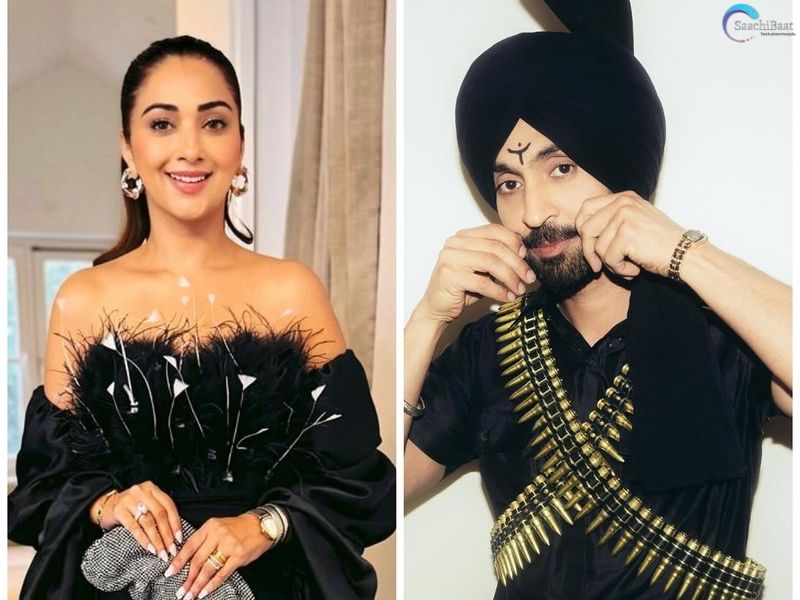
Diljit Dosanjh’s journey from Punjabi music and cinema to some of the world’s biggest stages has also changed the way Punjabi culture is represented in global fashion. For fashion designer Anjali Phougat, his Met Gala appearance captured that evolution particularly well. “I would choose his Met Gala look because of the thought behind the symbolism,” she said. For her, the most powerful part of the outfit was not simply how it looked, but what it said.
“The words ‘Main Hoon Punjab’ at the back said something incredibly powerful without needing a speech. I have arrived on a global stage, but I have not left my identity behind. That is what makes the look significant to me,” she said.
She also believes every element of the outfit contributed to the larger story. “The turban, the jewelry, the sword, and the traditional references were not decorative afterthoughts,” she said. “Together, they created a visual narrative about Punjab and its legacy,” she added. For Anjali, that balance is what fashion should ultimately be able to achieve. “It should create a bridge between heritage and modernity,” she said.
That philosophy is also reflected in her own work. Through Designer Dream Collection, she says she has explored how Indian heritage can be presented through an international fashion language. “I have never believed that representing your culture means looking backward,” she said. For her, tradition and modernity do not have to exist separately. “You can honor your roots while standing firmly in the future,” she said.
That is why she sees Diljit’s fashion journey as particularly meaningful. “Diljit embodies that beautifully,” she said.
She believes his influence goes beyond the clothes themselves. “There is also an energy to him that goes beyond clothing. Underneath that high energy, I see a remarkably positive and grounded human being,” she said.
“What has always struck me is the calmness behind the public persona. One philosophy I particularly resonate with is the idea that when people hurt you or take advantage of you, they are simply playing the role they have chosen to play in your journey,” she added.
For her, that reflects a sense of acceptance and emotional maturity. “That perspective reflects a level of acceptance and emotional maturity that I deeply value in my own life,” she said. Ultimately, she feels his influence extends well beyond fashion or music. “So for me, Diljit is not just an artist. He is an artist with an aura. His aura is not manufactured,” she said.What makes him particularly distinctive, she adds, is the way he carries his culture with him wherever he goes. “He is not simply wearing Punjabi culture,” she said, adding, “He is walking it, speaking it, performing it, and taking it with him onto the world’s biggest stages.”
That reach has even crossed generations in her own family. Anjali shares that her daughter, who wants to become a singer, knows very few Indian artists by name but immediately recognizes Diljit Dosanjh and Shah Rukh Khan. “To me, that says something profound about the cultural reach of an artist,” she said. For her, that kind of recognition means something much bigger than popularity. “When an artist can cross generations, continents, and cultural boundaries and still make a young person connect with where they come from, that is much bigger than entertainment,” she said. “That is influence. That is representation. And that is legacy. Diljit has shown that you do not have to leave your culture behind to become global. Sometimes, your culture is precisely what makes the world stop and look,” she ended.
××××××××××××××
Telegram Link :
For latest news, first Hand written articles & trending news join Saachibaat telegram group
