
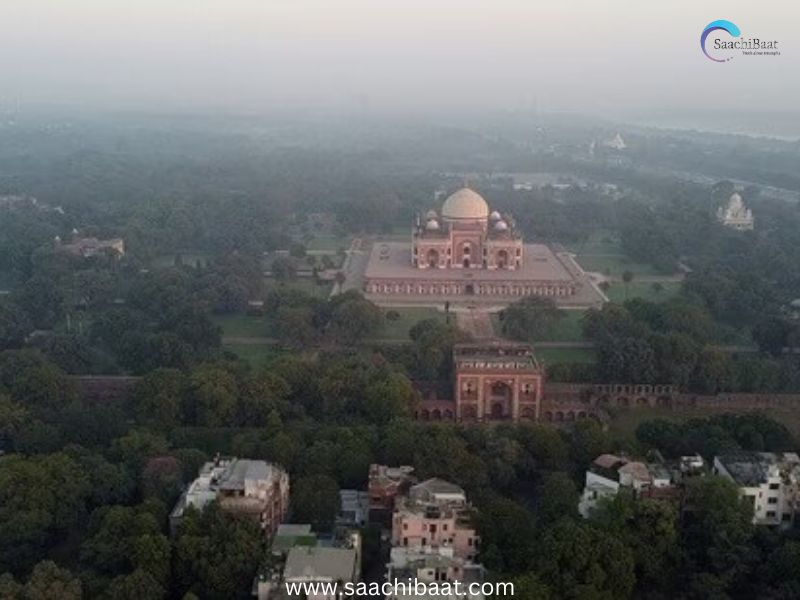
With the onset of October, Delhi has begun to witness its familiar annual struggle with air pollution. On Monday, the Air Quality Index (AQI) in the national capital dropped to 169, falling in the “moderate” category but already sparking concerns that the city is heading into another difficult pollution season.
AQI Shows Early Signs of Decline
As per the data released by the Central Pollution Control Board (CPCB), many areas of Delhi observed AQI between 160 and 180. Although still below the “poor” zone, officials note that the figures are continuously increasing as crop residue burning starts in adjoining states and weather patterns start entrapping the pollutants near the ground.
Why the Air is Getting Worse
The synergy of stubble burning, vehicle emissions, and construction dust has traditionally contributed to the capital city’s winter pollution crisis. Specialists predict that the present levels, though as yet not alarming, are an early warning of the surge that normally worsens in late October and November, after temperatures decrease even further. The issue is also aggravated by lower wind speeds, which hinder dispersal of pollutants.
Measures Taken by Authorities
As a precaution against deteriorating air quality, the Delhi government has already indicated that the Graded Response Action Plan (GRAP) will come into force in phases. Interventions could range from curbs on construction work, vehicular restrictions, and enhanced monitoring of industrial emissions. The authorities have also urged people to reduce private vehicle use and turn to public transport whenever feasible.
Public Reaction and Health Concerns
For Delhi residents, the news is no big shock. Most remember last year’s toxic AQI levels that led schools to close and caused hospitals to handle an influx of respiratory admissions. Health professionals are advising citizens to take precautions ahead of time—such as going out with masks, using air purifiers inside, and avoiding extensive outdoor activity.
Looking Ahead
Environmental groups stress that unless long-term measures are prioritized, short-term bans and restrictions will only offer temporary relief. Cleaner fuel adoption, stricter vehicular norms, and regional coordination to manage stubble burning remain key to reducing Delhi’s chronic winter pollution.
At 169, Delhi’s AQI is still moderate, but the capital is on the threshold of its most challenging season. As the familiar grey haze begins to set in, residents are bracing themselves, hoping this year will not mirror the suffocating smog that has become a grim annual ritual.
××××××××××××××
Telegram Link :
For latest news, first Hand written articles & trending news join Saachibaat telegram group
https://t.me/joinchat/llGA9DGZF9xmMDc1
