
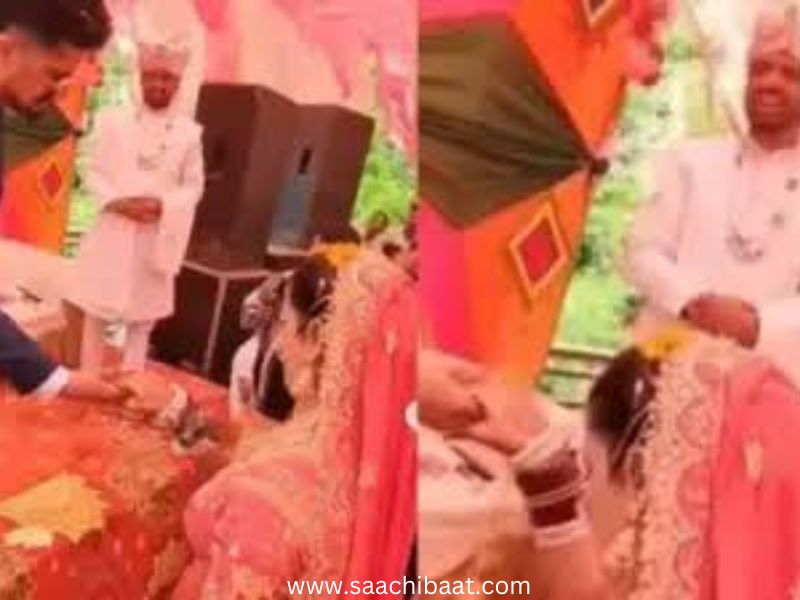
In a village nestled in Himachal Pradesh’s Sirmaur district, two brothers have openly embraced a centuries-old tribal custom by marrying the same woman, reigniting public discussion around the rare practice of familial polyandry. The wedding, held recently in Shillai, was not only a personal celebration but also a moment of cultural pride for the brothers and their community.
“We are proud of the tradition”
Pradeep and Kapil Negi, members of the Hatti tribal group, wedded Sunita Chauhan in a customary three-day function that attracted widespread publicity. Though such weddings are no longer announced publicly these days, the duo decided to flaunt their marriage, claiming they had nothing to conceal. “We were proud of our tradition and made this decision collectively,” claimed Pradeep, a government official. His younger brother Kapil, who came back from foreign countries to attend the ceremony, also seconded his views, saying that the wedding was on the basis of mutual respect and understanding.
The bride, Sunita, also confirmed that the choice was all hers, and she was not force-marched or pressured into becoming a bride of the brothers. We all agreed upon it together. “This is our life, and we have chosen it willingly,” she said.
Jodidara:- A polyandry marriage
The practice, locally referred to as “Jodidara,” is a conventional type of polyandry in which a woman marries two or more brothers in order to maintain ancestral holdings within the family and prevent land division. Although the tradition has gradually declined with time through modern legal systems and evolving social perceptions, it continues to persist within the Himachal’s tribal belt in some areas, such as among the Hattis.
Incognito ritual
What made this ceremony most unusual was the way it was publicized. In most instances, such marriages occur discreetly in an attempt to remain incognito. But the Negi family openly accepted the tradition, hosting hundreds of guests and carrying out all rituals as per tribal traditions. The ceremony involved traditional dances and music and was termed “joyous” by local witnesses.
The move by the family has been causing both bouquets and brickbats. While there are people who say it is an archaic practice, others see it as a valid expression of cultural heritage. Legally, although such weddings are not legally sanctioned throughout India, customary tribal rituals do find some protection under local and constitutional provisions.
The festival celebrates the continued tension between modern values and native culture—and how groups such as the Hattis are coping with identity, legality, and pride in the face of shifting times.
××××××××××××××
Telegram Link :
For latest news, first Hand written articles & trending news join Saachibaat telegram group
https://t.me/joinchat/llGA9DGZF9xmMDc1
