
🇮🇳 FACTS ABOUT INDIA 🇮🇳
=======================
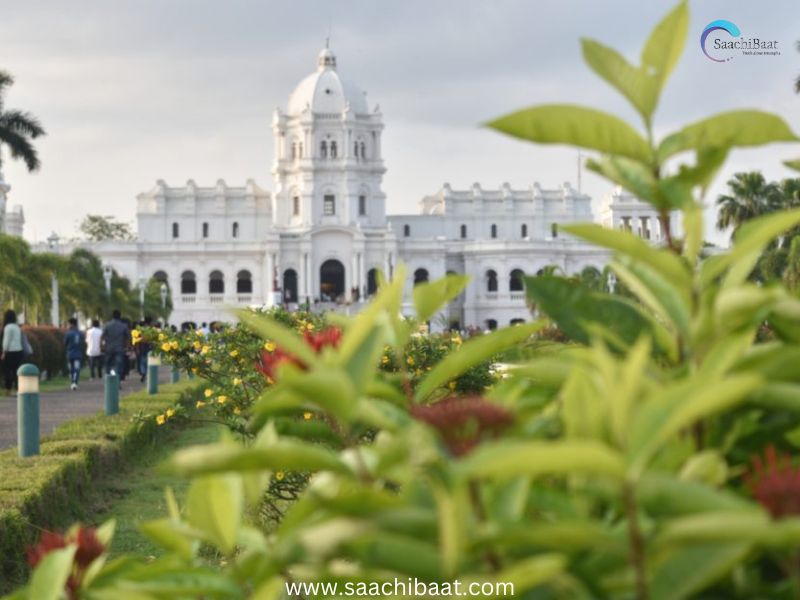
Tripura is a hilly state in northeast India, bordered on 3 sides by Bangladesh. It’s Capital: Agartala . The third-smallest state in the country,
Tripura meaning three cities, but the origin of the name of Tripura is still a matter of controversy among historians and researchers. … Many researchers explain the name ‘Tripura’ from its etymological origin: the word ‘Tripura’ is a compound of two separate words, ‘ tui’ (water) + ‘pra’ (near) which in totality means ‘ near water’.
The area of modern Tripura—ruled for several centuries by the Manikya dynasty —was part of an independent princely state under the protectorate of the British Empire. The independent Tripuri Kingdom (also known as Hill Tippera) joined the newly independent India in 1949. An ancient name of Tripura is Kirat Desh (English: “The land of Kirat”), probably referring to the Kirata Kingdoms or the more generic term Kirata.
Following the independence of India in 1947, Tippera district – the estate in the plains of British India – became a part of East Pakistan, and Hill Tippera remained under a regency council until 1949. The Maharani Regent of Tripura signed the Tripura Merger Agreement on 9 September 1949, as a result of which Tripura became a Part C state of India.
🛕 VEDIK GYAN
=======================
NAG PANCHAMI • The festival of snakes
Nag Panchami is celebrated on the fifth day (panchami) in shukla paksha (bright half, after the new moon) in the month of Shravan. People offer milk, honey, flowers, and turmeric to snake idols or live snakes, often at ant hills or snake pits.
The roots of the festival of Nag Panchami can be found in Hindu scriptures. The Nagas were born of the third wife of Kashyap who is the son of Brahma – the creator. So, the Nagas were stepbrothers to the gods or the Devatas. They ruled the underworld or the Patal loka. Eight major Nagas have been described in the scriptures. One of them was Kaliya who was evil. When Krishna – the incarnation of Lord Vishnu was only a boy, he defeated Kaliya and danced on his head, putting an end to his misdeeds. Nag Panchami marks the day on which Krishna defeated Kaliya.
Science and Ecology Behind Nag Panchami:
1. Rainy Season and Snake Activity:
Nag Panchami occurs during monsoon, when snakes come out of their burrows due to flooding or waterlogging.
Snakes are cold-blooded reptiles, and the moist environment during the rainy season makes them more active and visible in rural areas.
Worshipping snakes during this time is a symbolic act of respect, encouraging non-violence and safety rather than killing them out of fear.
2. Ecological Importance of Snakes:
Snakes are natural pest controllers. They maintain ecological balance by feeding on rats, insects, and other small animals.
Worship and protection of snakes on Nag Panchami can be seen as a way to promote biodiversity and ecological awareness in traditional society.
3. Symbolism of Snake as Energy (Kundalini):
In yogic and tantric science, the serpent represents Kundalini energy – the dormant spiritual energy believed to be coiled at the base of the spine.
Nag Panchami is sometimes interpreted as a celebration of inner awakening, aligning with ancient knowledge of energy systems and chakras.
4. Soil Health and Burrow Systems:
Snake burrows help in aerating soil and improving subsurface drainage. Their presence indicates healthy soil.
Worshipping them can be interpreted as a recognition of their role in maintaining soil ecology.
🐍Snake’s Don’t Naturally Drink Milk
Snakes are carnivorous reptiles — they do not drink milk in nature. If a snake drinks milk, it’s usually out of dehydration or stress, not as a food preference. Excessive milk can even harm snakes’ health, causing digestive issues.
LEARN Sanskrit*
=======================
भगवतानुग्रह प्राप्तिरस्तु
(bhagavat aanugrah praaptirastu) : GOD BLESS YOU
××××××××××××××
Telegram Link :
For latest news, first Hand written articles & trending news join Saachibaat telegram group
https://t.me/joinchat/llGA9DGZF9xmMDc1
 |
Ms. Pooja, |
