
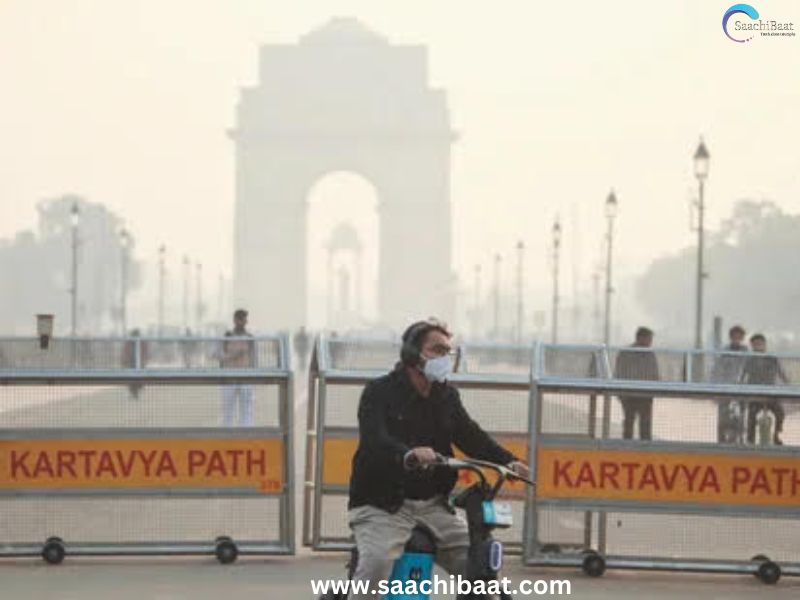
New Delhi’s air quality continued to deteriorate sharply, edging dangerously close to the ‘severe’ category on Tuesday. More than 15 monitoring stations across the national capital recorded Air Quality Index levels above 400 — a threshold that poses health risks even to healthy individuals — according to the Central Pollution Control Board.
Increasing Pollution Levels
The city woke up to a thick blanket of smog, with several areas, such as Anand Vihar, Jahangirpuri, RK Puram, and Mundka recording dramatically reduced visibility. The overall AQI in Delhi hovered around 395 by late afternoon — just shy of the ‘severe’ range (401-500). The main pollutants responsible were PM2.5 and PM10, which have spiked due to a combination of vehicular emissions, stubble burning in neighboring states, and stagnant weather conditions.
Causes Behind the Surge
Experts attribute the sudden spike in pollution to continued stubble burning in Punjab and Haryana, combined with low wind speed preventing the dispersal of pollutants. Firecracker usage during Diwali further worsened the situation, adding particulate matter into an already saturated atmosphere. According to SAFAR (System of Air Quality and Weather Forecasting and Research), the share of stubble burning in Delhi’s pollution rose to nearly 25%, up from 16% the previous week.
Health and Government Response
Doctors have warned the toxic air could cause severe respiratory ailments, particularly among children, the elderly, and those who suffer from pre-existing conditions such as asthma or bronchitis. Hospitals in the city have already reported a rise in patients with breathing difficulties and throat infections.
The Delhi government has appealed to its residents to reduce outdoor exposure, avoid morning walks, and wear N95 masks when going outdoors. It has enforced measures under the GRAP Stage 3, which bar construction activities and restrict the use of diesel generators.
No Immediate Relief Expected
Meteorological forecasts indicate that the situation may persist for the next few days as no significant change is expected in the wind speed or amount of rainfall. Experts also say that unless strong northwesterly winds pick up or rains help wash away the pollutants, Delhi’s air may soon enter the ‘severe’ zone, the most hazardous level on the AQI scale. The national capital continued to fight the annual pollution crisis, leaving the residents once again grappling with toxic air, a grim reminder of worsening environmental health in the capital.
××××××××××××××
Telegram Link :
For latest news, first Hand written articles & trending news join Saachibaat telegram group
https://t.me/joinchat/llGA9DGZF9xmMDc1
