
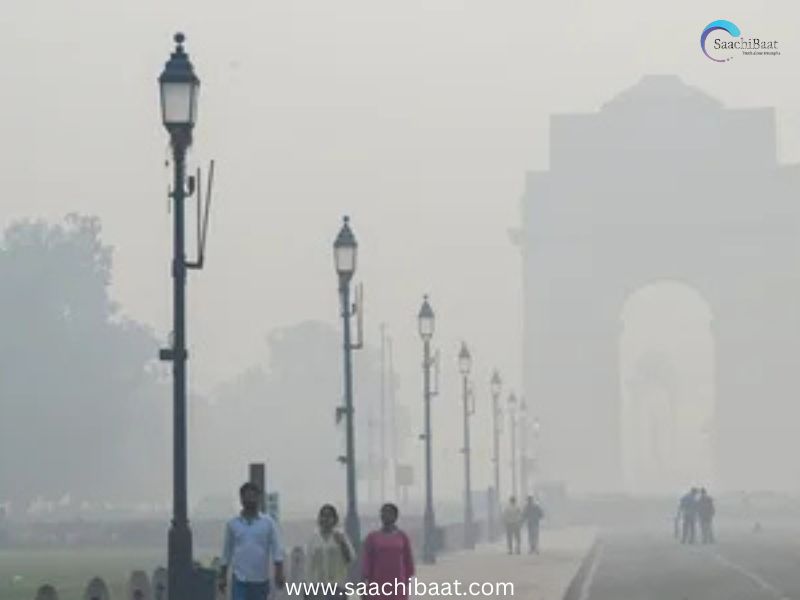
A day after Diwali celebrations, Delhi’s air quality showed a slight increase in pollution levels, but unlike previous years, it did not touch the “severe” category. According to data from the Central Pollution Control Board (CPCB), the city’s average Air Quality Index (AQI) remained in the “very poor” range, hovering around 390 on Monday morning, compared to last year’s post-Diwali average which had crossed 450.
Delhi sees improved air quality compared to years before
Officials attributed a more moderate increase in AQI to stringent winds and proper implementation of pollution-controlling actions under GRAP. The measures included a firecracker ban, halting construction activities, and rigorous checking of emissions from vehicles. The Delhi government stated its anti-pollution strategies kept the spike at bay despite widespread celebrations all around the capital.
Haryana cities show alarming pollution levels
Though Delhi escaped the “severe” category, two Haryana cities, Faridabad and Gurugram, experienced very poor air quality. Faridabad had an AQI of 445 and Gurugram at 422, both in the “severe” category. Experts cited excessive local use of firecrackers, stagnant winds, and cross-border pollution wafting in from surrounding areas.
Firecracker ban violation cases reported
In spite of repeated requests and stringent enforcement, parts of Delhi and NCR saw firecrackers being burst late in the night. The Delhi Police filed FIRs and fined violators. Nevertheless, the extent of violations seemed lower compared to earlier years, officials at the pollution control board said.
Wind speed and weather assist in restricting spike
Meteorologists added that moderate northwesterly winds had dispersed pollutants overnight, which averted smog formation. But they cautioned that falling temperatures and light winds anticipated mid-week may trigger pollution again. The India Meteorological Department (IMD) forecast that air quality will worsen somewhat before the weekend improves.
Authorities persist health advisory
The Delhi government and health officials have urged residents to avoid prolonged outdoor exposure, especially during early morning and late evening hours. They also advised using air purifiers indoors and wearing masks outdoors.
Although the marginal improvement this year has helped to bring some reprieve to people, however, experts caution that without long-term pollution control measures and regional cooperation, Delhi and its surrounding areas could still be plagued with recurring air quality crises following each Diwali.
××××××××××××××
Telegram Link :
For latest news, first Hand written articles & trending news join Saachibaat telegram group
https://t.me/joinchat/llGA9DGZF9xmMDc1
