
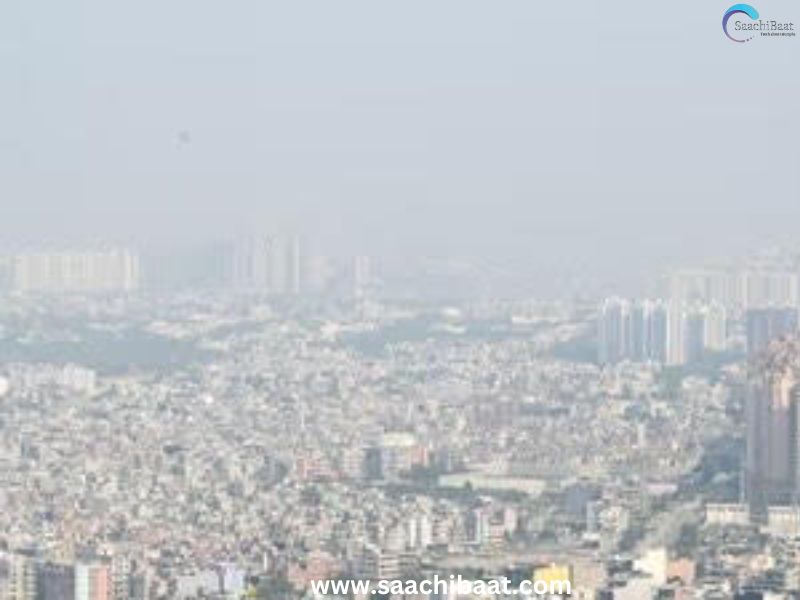
With the festive season in sight, the air quality in Delhi-NCR has again begun to worsen, leading authorities to enforce Stage I of the Graded Response Action Plan (GRAP). The decision was taken after the Air Quality Index (AQI) of many areas in the capital dipped into the ‘poor’ category, signaling the premature beginning of pollution season.
What Initiates GRAP-I Implementation
The overall AQI in Delhi exceeded the 200-mark, with areas such as Anand Vihar, Jahangirpuri, and Ghaziabad reporting higher pollution levels, according to the Commission for Air Quality Management (CAQM). In light of this, the commission asked all NCR states to implement GRAP-I measures with immediate effect to avoid further degradation.
Experts attributed deteriorating air quality to stubble burning in other states, enhanced vehicle emissions, and construction activities. With Diwali and winter around the corner, the situation is likely to deteriorate unless preventive measures are adopted stringently.
What GRAP-I Means for Citizens
In Stage I (Poor AQI range: 201–300) of GRAP, many restrictions have been enacted:
• Ban on open burning of waste and biomass
•\tClose monitoring of construction and demolition work
\t•\tPeriodic water sprinkling and mechanized sweeping of roads
\t•\tEncouragement of public transport over private transport
\t•\tShutting down of diesel generator sets (with the exception of emergency services)
The CAQM has also asked municipal corporations to ramp up street sweeping work, inspect dust emissions, and conduct timely waste collection in order to reduce pollution.
Government and Expert Responses
Delhi Environment Minister Gopal Rai informed that the government has begun launching anti-dust campaigns and is in close coordination with NCR states. “The emphasis is on stopping the situation from falling in the ‘very poor’ category,” he added.
Experts, however, warn that the steps may not be sufficient if firecracker burning and stubble burning do not come under control. “Every year, GRAP starts reactively rather than proactively,” said Centre for Science and Environment (CSE)’s Sunita Narain.
What Lies Ahead
The next few weeks are critical since Diwali festivities, along with reduced temperatures and stagnant air, tend to drive pollution levels to dangerous heights. People have been asked to skip firecrackers, carpool whenever they can, and remain indoors in early mornings when pollution levels peak.
Now that GRAP-I has kicked in, the question now is whether Delhi-NCR is able to keep the pollution situation at bay before it gets out of hand — or if the capital is on its way again towards another Diwali of smog.
××××××××××××××
Telegram Link :
For latest news, first Hand written articles & trending news join Saachibaat telegram group
https://t.me/joinchat/llGA9DGZF9xmMDc1
