
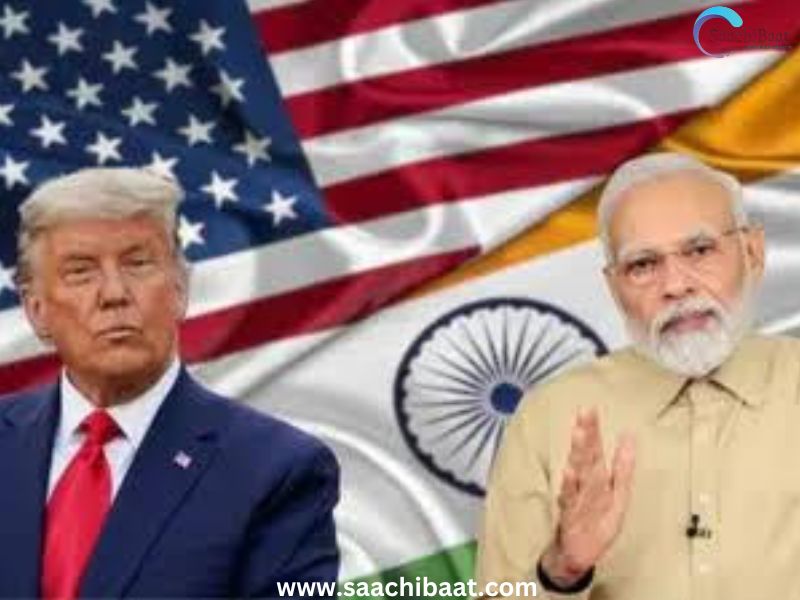
US President Donald Trump has unveiled a new direction of trade policy, indicating that if he gets back to the White House, his government will initially impose a “small tariff” on importation of medicines. These are medicines and allied medicines produced overseas and made available in the US, especially from nations such as India and China. Trump’s comment is one in a series of his narrative to restore strategic manufacturing on American soil.
Focus on domestic drug production
During a campaign address, Trump emphasized the need for the US to reduce dependency on foreign countries for essential medicines. “We’re going to build up our pharmaceutical industry right here in the United States,” he declared. “A modest tariff will be the first step — just sufficient to provide a level playing field for our manufacturers.” The ex-president asserted that this action would not only be bolstering domestic capacity but also provide security to the nation in cases of emergency or breakdown of international supply chains.
India and China under the spotlight
Even though Trump did not mention any nation specifically when describing the new tariff strategy, experts are of the opinion that India and China will be most impacted. Both countries are among the largest manufacturers of generic medicines and APIs to supply to America. Trump had earlier complained about America becoming dependent on “potential adversaries” for lifesaving medicines, and this announcement seems to be a direct follow-up on that.
Mixed industry responses
The proposal has elicited mixed responses from the drug manufacturing industry. While a few US drug makers hailed the step, terming it as one that would ramp up local production and innovation, others cautioned that tariffs might result in higher drug prices for American consumers. Indian associations of pharma are closely following the developments, with many already calculating the possible cost implications if such a policy were to be implemented.
Experts warn against undesirable effects
Trade experts have warned that the tariff might seem “small” to begin with but could increase incrementally if tensions ratchet up or domestic supply cannot keep pace with demand. They also noted that such actions could trigger retaliation from affected nations, causing pharma supply chains to be disrupted on a global scale.
Global implications remain uncertain
As Trump prepares to run for president again, the suggested pharma tariff is both a political and an economic strategy. Though it falls into line with his America First agenda, its ultimate effect on global healthcare pricing, especially in developing countries dependent on inexpensive Indian generics, is unclear.
××××××××××××××
Telegram Link :
For latest news, first Hand written articles & trending news join Saachibaat telegram group
https://t.me/joinchat/llGA9DGZF9xmMDc1
